Informed Vaccine Exemptions Protect All Kids
What is an Informed Exemption?
The Oregon government officially calls it a “nonmedical” exemption. We call them informed exemptions. Parents who choose them made their decision based on research, science, and real experience as parents.
Did you know…
It is extremely difficult to get a medical exemption in Oregon.
Current medical vaccine exemptions are only available to children who have had the adverse events listed to the right (or below). Parents must find a doctor willing to sign a form and then it gets reviewed by the county health department to approve or decline.
But medical exemptions do not protect children who have had any of 50+ adverse events, conditions, and contraindications like stroke or seizures (see list below), nor children whose siblings had severe events or even died following a vaccine.
These are the ONLY vaccine adverse events and conditions eligible for medical exemptions in Oregon, across every vaccine on the current schedule:
https://www.cdc.gov/vaccines/hcp/imz-best-practices/contraindications-precautions.html accessed 9/22/26
Anaphylaxis, encephalopathy (coma, reduced consciousness; for pertussis only), anaphylactic allergy to yeast, severe immunodeficiency (e.g. cancer, chemo; for live vaccines only), intussusception (rotavirus only).
Vaccine adverse events that DON’T QUALIFY for medical exemptions. These are listed on vaccine inserts as possible events. Many are also listed as contraindications, but even contraindications DON’T QUALIFY for a medical exemption in Oregon.
Not listed here are reactions (or death) of a sibling or other family member.
Seizures
Stroke
Guillain-Barré syndrome
Fever over 105° F
Encephalitis
Stevens-Johnson syndrome
Hypotonic unresponsive episodes
Nerve damage (neuropathy)
Vasculitis (blood vessel inflammation)
Pulmonary Embolism
Systemic Lupus Erythematosus
Paralysis
Moderate to severe allergic reactions
Angioneurotic edema
Limb paralysis
Apnea
Cyanosis
Swollen lymph nodes
Cellulitis
Spinal cord inflammation
Pneumonia
Thrombocytopenic purpura
Worsening of multiple sclerosis symptoms
Palpitations or rapid heart rate
Wheezing or asthma attacks
Eczema
Hair loss
Vasovagal syncope
Vertigo
Tinnitus
Facial nerve paralysis
Inflammation of the pancreas
Arthritis
Acute disseminated encephalomyelitis (brain and spinal cord inflammation)
Optic nerve inflammation
Kawasaki disease
Onset of multiple sclerosis
Multiple nerve inflammation and dysfunction
Henoch-Schönlein purpura (severe immune reaction)
Bloody stools
Panniculitis
Nerve deafness in the ear
Eye inflammation permanently affecting vision
Abscess at injection site
Testicular pain and swelling
Subacute sclerosing panecephalitis
Ataxia (balance problems)
Pneumonitis
Extensive swelling of injected limb and nearby joints
Bacterial skin and tissue infections
Difficulty swallowing
Tremors
Autoimmune arthritis
Thyroiditis
Blood clots in limbs
If “nonmedical” or informed exemptions were removed, how would it be equitable that children with reactions and conditions that DON’T QUALIFY be coerced to risk their health for children with qualified reactions and conditions?
Has your child experienced one of these reactions and an informed exemption is the only way you could protect them? Please contact us if you’re willing to share your story. We can help you create a written piece to share with legislators or prepare oral or written testimony.
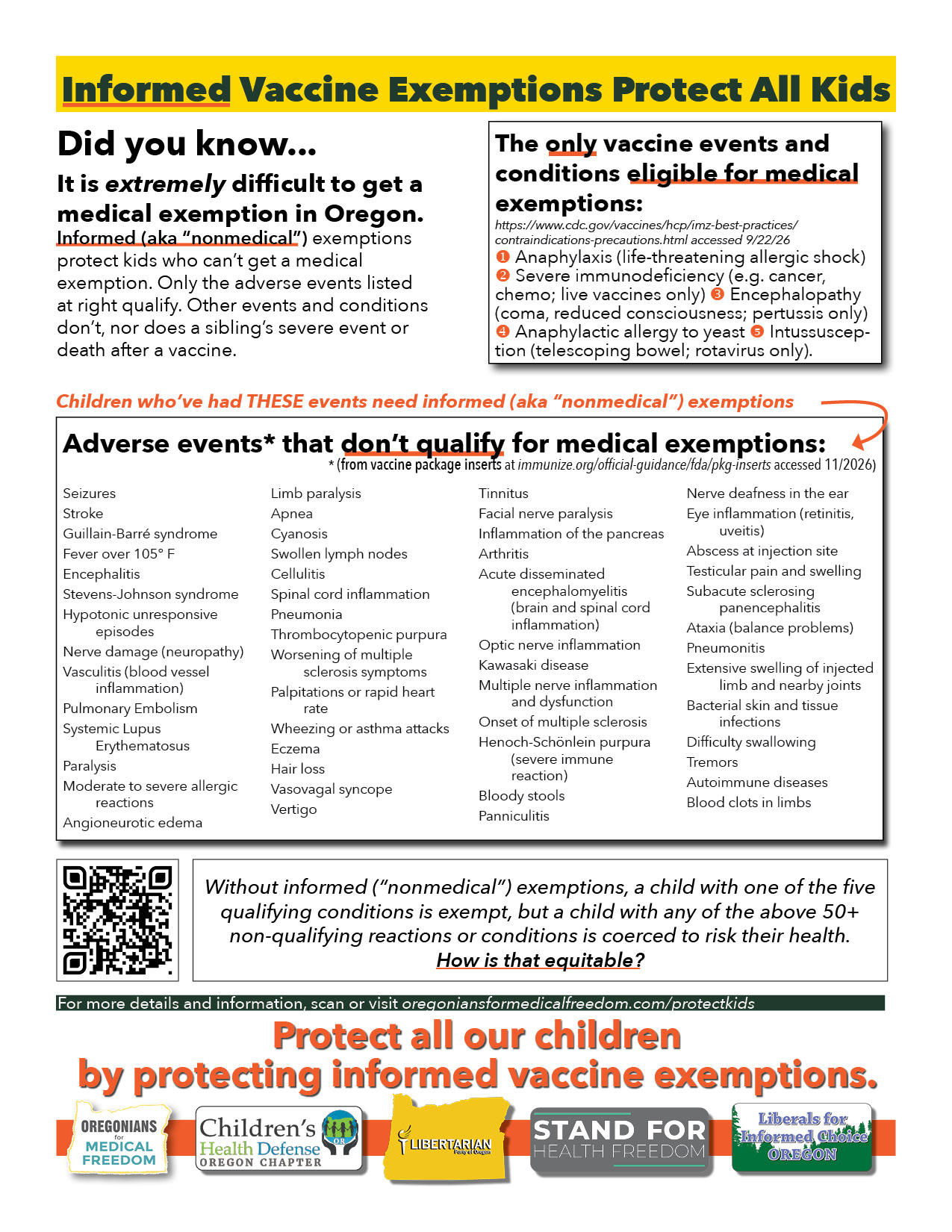
Download our Informed Exemptions Protect All Kids flyer by clicking the thumbnail below: